Nwankwo Kanu Inspiring Journey From Football Glory to Philanthropy
The remarkable story of a Nigerian former footballer who overcame adversity, won major trophies, and built a lasting humanitarian legacy.

Introduction
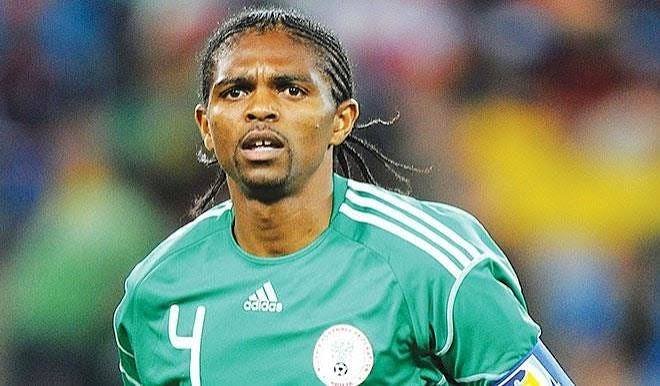
Nwankwo Kanu is one of the most respected names in Nigerian football and one of Africa’s best-known footballers. Born on 1 August 1976 in Owerri, Nigeria, he built a remarkable career as a forward, representing clubs including Ajax, Inter Milan, Arsenal, West Bromwich Albion, and Portsmouth. His achievements include UEFA Champions League success, Premier League titles, an Olympic gold medal with Nigeria, and two African Footballer of the Year awards.
His career was not always easy. A serious heart condition discovered during his playing years threatened to interrupt his football journey, but successful treatment allowed him to return to professional football. That difficult experience later inspired him to establish the Kanu Heart Foundation, giving his story an important humanitarian dimension beyond sport.
Quick Bio
| Category | Details |
|---|---|
| Full Name | Nwankwo Christian Nwosu Kanu |
| Known As | Nwankwo Kanu, Kanu |
| Date of Birth | 1 August 1976 |
| Age | 50 in 2026 |
| Birthplace | Owerri, Imo State, Nigeria |
| Nationality | Nigerian |
| Profession | Former professional footballer and philanthropist |
| Playing Position | Forward |
| Height | Approximately 1.97 m |
| Professional Career | 1992–2012 |
| Major Clubs | Iwuanyanwu Nationale, Ajax, Inter Milan, Arsenal, West Bromwich Albion, Portsmouth |
| International Team | Nigeria |
| Major International Honour | Olympic Gold, 1996 |
| Major European Honour | UEFA Champions League, 1995 |
| African Footballer of the Year | 1996 and 1999 |
| Charity | Kanu Heart Foundation |
The basic sporting information above is supported by football and Olympic records.
Early Life and Football Beginnings
Nwankwo Kanu was born in Owerri, in southeastern Nigeria. Football became an important part of his early development, and he progressed through youth football before beginning his senior career in Nigeria.
The Kanu Heart Foundation states that he chose football professionally and began playing at a serious level at around the age of 15. His performances at youth level soon attracted international attention.
Kanu became part of Nigeria’s successful youth generation in the early 1990s. In 1993, he helped Nigeria win the FIFA U-17 World Championship, an achievement that strengthened his reputation as an emerging Nigerian football talent.
Rise Through Nigerian Football
Kanu began his senior career with Iwuanyanwu Nationale. Football records credit him with 25 league appearances and 15 goals for the Nigerian club during the 1992–93 season.
His performances helped him earn a move to Europe, where his career developed rapidly. Rather than remaining a promising young Nigerian player, Kanu soon became part of the international football scene.
Ajax and European Breakthrough
Kanu joined Ajax in the Netherlands in 1993. His development in Dutch football was a major turning point in his career.
During his Ajax years, he became part of a successful team that won domestic honours and the UEFA Champions League in 1995. He also helped Ajax win the UEFA Super Cup and Intercontinental Cup during this period.
The Ajax experience established Kanu as a player capable of competing at the highest level of European football. His technical ability, height, movement, and creativity made him an unusual and difficult forward to defend against.
Inter Milan and a Major Career Setback
After his successful spell at Ajax, Kanu moved to Inter Milan in Italy.
The positive side of his European rise was that he had reached one of the world’s biggest football leagues. The negative side was that his career soon faced a serious medical challenge when a heart condition was discovered. His condition required surgery, and his professional future became uncertain.
Kanu successfully underwent heart surgery in Cleveland, Ohio, and eventually returned to professional football. His recovery became one of the defining stories of his career and later influenced his charitable work.
Arsenal and Premier League Success
In February 1999, Kanu joined Arsenal. The move gave the Nigerian forward an opportunity to rebuild his career in the Premier League.
One of his most famous Arsenal performances came against Chelsea in October 1999. Arsenal were two goals behind with approximately 15 minutes remaining, but Kanu scored three times to complete a dramatic comeback. His final goal, scored from an extremely difficult angle, became one of the memorable goals of the Premier League era.
Kanu scored 12 Premier League goals during the 1999–2000 campaign and won the African Footballer of the Year award that year. He later became part of Arsenal’s successful teams that won Premier League and FA Cup honours.
The Arsenal Invincibles
Kanu was part of the Arsenal squad during the famous 2003–04 Invincibles season.
Arsenal completed the entire Premier League campaign without losing a match, creating one of the most famous achievements in English football. Kanu’s role became smaller as other attacking players took greater responsibility, but he remained part of the squad during this historic campaign.
His Arsenal career ended in 2004 when he moved to West Bromwich Albion.
West Bromwich Albion
Kanu joined West Bromwich Albion in 2004.
He spent two seasons with the club and continued playing in the Premier League. Available football records credit him with 53 league appearances and seven league goals during his West Bromwich Albion spell.
Although his time at West Bromwich Albion did not produce the same collection of trophies as his Arsenal years, it represented another stage of a long Premier League career.
Portsmouth and the 2008 FA Cup
In 2006, Kanu joined Portsmouth.
His Portsmouth career produced another major achievement. In the 2008 FA Cup final, Portsmouth defeated Cardiff City 1–0 at Wembley, with Kanu scoring the decisive goal. UEFA records confirm that his first-half goal secured the trophy for Portsmouth.
Kanu subsequently remained with Portsmouth, including during the club’s participation in European competition. UEFA reported in 2008 that he had signed a new contract after helping Portsmouth win the FA Cup.
He eventually retired from professional football in 2012.
Nigeria National Team Career
Kanu became a major figure for the Nigerian national team.
He represented Nigeria at senior level for many years and participated in major international competitions, including FIFA World Cups and Africa Cup of Nations tournaments. Statistical sources differ slightly in their international totals, with records generally placing his senior career around the mid-80s appearances.
His greatest international achievement came with Nigeria’s Olympic team in 1996.
Olympic Gold in Atlanta
At the 1996 Atlanta Olympics, Kanu played a central role in Nigeria’s historic gold-medal campaign.
Nigeria produced an extraordinary comeback against Brazil in the semi-final, winning 4–3 after extra time. Kanu was one of the key figures in that match.
Nigeria then defeated Argentina 3–2 in the final to win Olympic football gold. The victory became one of the most celebrated achievements in Nigerian sporting history, and Kanu’s contribution helped establish his international legacy.
Career Timeline
1992–1993
Kanu began his senior career with Iwuanyanwu Nationale in Nigeria.
1993–1996
He played for Ajax, developing into a major European football talent.
1995
Kanu won the UEFA Champions League with Ajax.
1996
He helped Nigeria win Olympic football gold in Atlanta.
1996–1999
Kanu played for Inter Milan, with his career interrupted by heart surgery.
1999–2004
He joined Arsenal and became a popular Premier League forward.
1999
He scored his famous hat-trick against Chelsea during Arsenal’s comeback at Stamford Bridge.
2001–2004
Kanu won Premier League and FA Cup honours with Arsenal and was part of the 2003–04 Invincibles squad.
2004–2006
He represented West Bromwich Albion.
2006–2012
He played for Portsmouth.
2008
He scored Portsmouth’s winning goal in the FA Cup final.
2012
Kanu retired from professional football.
Career Statistics
Published football databases record Kanu with 406 senior domestic league appearances and 98 league goals across his listed clubs. His club totals are commonly recorded as follows:
| Club | Years | League Apps | League Goals |
|---|---|---|---|
| Iwuanyanwu Nationale | 1992–1993 | 25 | 15 |
| Ajax | 1993–1996 | 54 | 25 |
| Inter Milan | 1996–1999 | 12 | 1 |
| Arsenal | 1999–2004 | 119 | 30 |
| West Bromwich Albion | 2004–2006 | 53 | 7 |
| Portsmouth | 2006–2012 | 143 | 20 |
| Total | 1992–2012 | 406 | 98 |
Different databases can produce different totals because they count competitions and appearances differently, so these figures should be understood as the commonly listed league statistics rather than every competitive appearance.
Playing Style and Football Ability
Kanu was a distinctive forward because his tall frame was combined with excellent technical ability.
His height allowed him to compete physically, while his control, creativity, passing and finishing made him more versatile than a traditional target forward. His unusual movement often made him difficult for defenders to predict.
His memorable performances for Arsenal and Nigeria showed that he could influence important matches even when he was not playing as a conventional centre-forward.
African Footballer of the Year
Kanu won the African Footballer of the Year award twice, in 1996 and 1999.
The awards reflected his achievements with Ajax, Nigeria and later Arsenal. They also confirmed his status among the leading African footballers of his generation.
Personal Life and Family
Kanu has kept many aspects of his private family life away from detailed public documentation. Therefore, unsupported claims about his parents, grandparents, extended family tree, private relationships, or personal routines should not be treated as established facts.
Publicly available reporting identifies Amara Kanu as his wife, and interviews with her have discussed their family life and children. Beyond those publicly documented details, there is no need to speculate about private family matters.
Heart Condition and Recovery
Kanu’s heart condition is an important and well-documented part of his biography.
The condition was discovered during his career and required surgery. He successfully returned to professional football, demonstrating significant resilience. His experience later motivated him to help young people facing heart conditions themselves.
This part of his story is especially significant because his personal challenge eventually became the foundation for a wider humanitarian mission.
Kanu Heart Foundation
Kanu founded the Kanu Heart Foundation in 2000.
The organization supports underprivileged children and young adults with heart conditions by helping them obtain necessary cardiac treatment and surgery. The foundation describes its mission as helping people who might otherwise struggle to access life-saving treatment.
The foundation has become one of the most important parts of Kanu’s post-football legacy. His charitable work demonstrates how a difficult personal experience can inspire efforts that benefit other people.
Legacy of a Nigerian Former Footballer
Nwankwo Kanu’s legacy is built on more than goals and trophies.
As a Nigerian former footballer, he succeeded in several major football environments. He won the Champions League with Ajax, Premier League titles with Arsenal, an FA Cup with Portsmouth, and Olympic gold with Nigeria. His two African Footballer of the Year awards further underline the importance of his career.
His influence also extends beyond football. Through the Kanu Heart Foundation, he has used his public profile to support children and young adults facing serious heart conditions. This combination of sporting success and philanthropy has made him an enduring Nigerian sporting figure.
Conclusion
Nwankwo Kanu’s journey is a story of talent, achievement, adversity and service. From his early football development in Nigeria to Ajax, Inter Milan, Arsenal, West Bromwich Albion and Portsmouth, he built a career that crossed some of the biggest stages in world football.
His career faced a serious setback because of a heart condition, but he returned to professional football and continued to achieve major honours. His Olympic gold medal, Champions League triumph, Premier League titles, FA Cup victories and African Footballer of the Year awards established his sporting legacy, while the Kanu Heart Foundation created a lasting humanitarian legacy.
Frequently Asked Questions
1. Who is Nwankwo Kanu?
Nwankwo Kanu is a Nigerian former footballer who played as a forward for clubs including Ajax, Inter Milan, Arsenal, West Bromwich Albion and Portsmouth.
2. When was Nwankwo Kanu born?
Nwankwo Kanu was born on 1 August 1976 in Owerri, Imo State, Nigeria.
3. What is Nwankwo Kanu famous for?
He is famous for his successful European club career, Nigeria’s 1996 Olympic gold medal, and his achievements with Arsenal and Portsmouth.
4. Is Nwankwo Kanu married?
Yes, publicly available reporting identifies Amara Kanu as his wife.
5. Does Nwankwo Kanu have children?
Yes, public reporting about his family identifies him as a father, although detailed information about his children’s private lives should not be speculated about.
6. What happened to Nwankwo Kanu’s heart?
A heart condition was discovered during his playing career, and he underwent successful surgery before returning to professional football.
7. When did Nwankwo Kanu retire from football?
He retired from professional football in 2012 after finishing his playing career with Portsmouth.
8. What is the Kanu Heart Foundation?
It is a foundation established by Kanu in 2000 to help underprivileged children and young adults obtain treatment for heart conditions.